Configure Purple Variants
Purple Hub
Summary
This guide provides instructions on how to configure article (post) variants in Purple Hub via the Purple Variants feature. Variants enable you to create separate versions of content for various platforms, such as online or print. This configuration ensures each format can be handled independently within the Purple Hub.
Preconditions
- Have the "Purple Variants" Plugin enabled in Purple Hub. This can only be done by a Super Admin, a role restricted to Purple staff. If you want us to enable the Plugin for you open a ticket in our Support Helpdesk.
- Have an Admin role in Purple Hub to configure Purple Variants
Purple Variants Settings
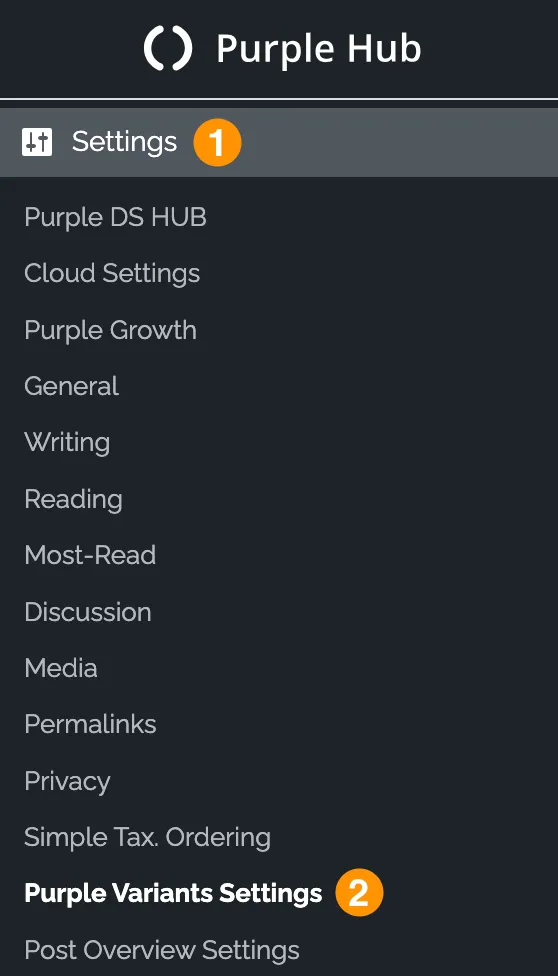
Once the Purple Variants plugin is activated, within the Settings (1) menu, you will now see a new sub-menu labeled Purple Variants Settings (2). With click on this sub-menu opens the configuration page for Purple Variants.
Choosing post types as variants
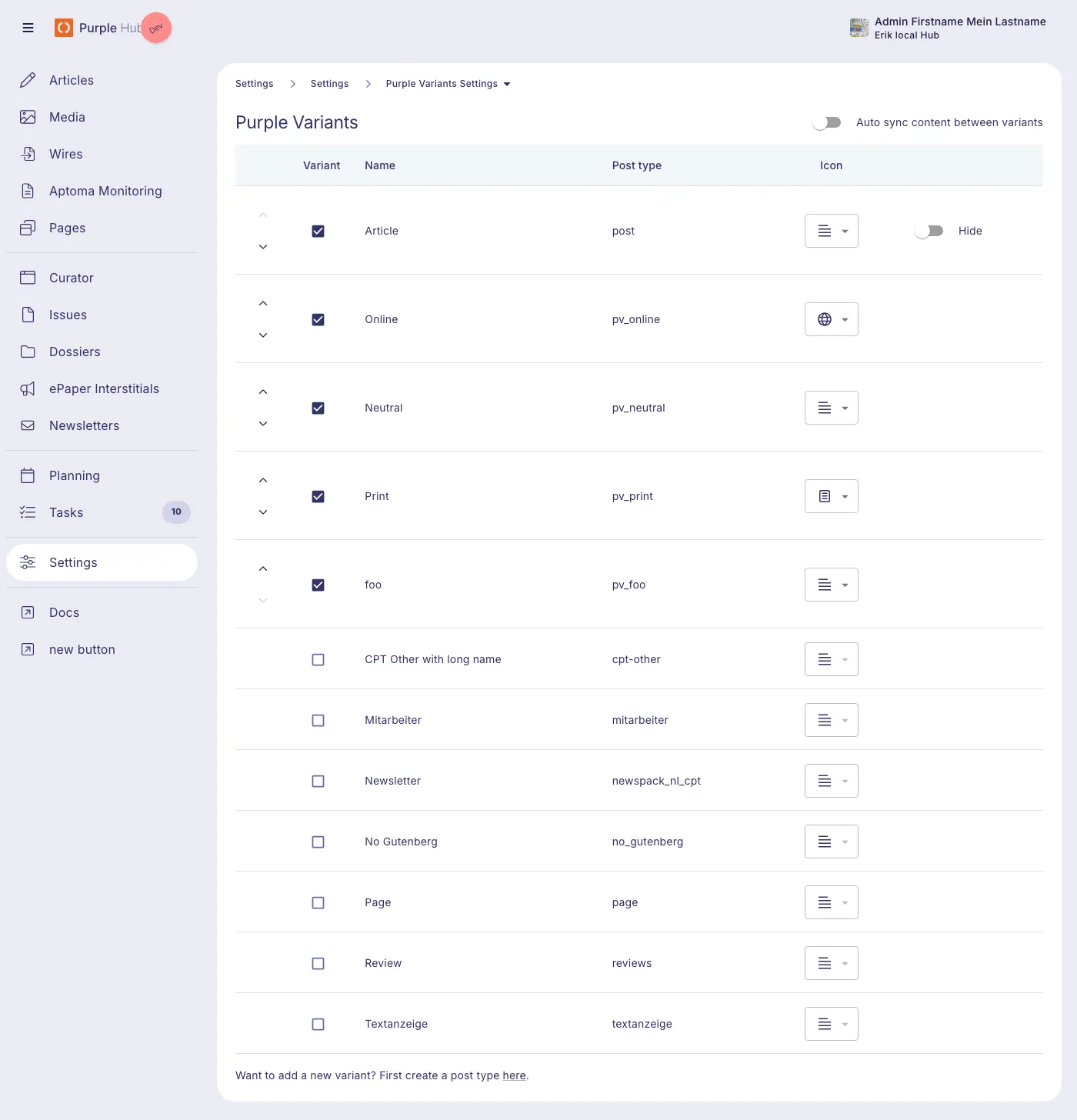
Every variant is a post type of your Purple Hub. The settings page lists all post types that can be used as a variant, with their Name and their Post type key.
- Tick the Variant checkbox of a post type to use it as a variant.
- Choose the Icon of each variant: Neutral, Online or Print.
- Change the order of the variants with the arrows on the left of their rows.
- Untick the checkbox to stop using a post type as a variant. Its articles and their links to other variants are kept, so ticking it again brings the variants back.
Note: The Article variant can be removed from the interface by toggling the 'Hide' option on the right side of its row.
Adding a new variant
To add a new variant, first create a new post type for it, see Create a Custom Post Type in Purple Hub. The new post type then appears in the list of the Purple Variants settings, where you can tick it as a variant.
Variant icons
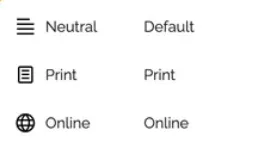
Each variant is assigned a unique icon to help visually differentiate between them. Icons are automatically displayed next to each variant type (Neutral, Online, Print) in Purple Hub for you to quickly identify them.
Visibility in the editor interface
The Purple Variants editor sidebar is only shown for articles of post types that are used as variants. Articles of all other post types are not treated as variants: they get no sidebar, are not listed as variants of other articles, and the automatic sync does not change them.
Auto sync content between variants
With the Auto sync content between variants switch above the table turned on, saving an article automatically copies its content to all other variants of that article, so the variants always stay identical. The switch is off by default and applies to the whole Purple Hub.
The automatic sync copies the same content as the sync icon in the editor sidebar: title, content, excerpt, authors, featured image, categories, tags, and the ACF fields configured to be copied to new variants. It works in every direction: saving any variant updates all the others. Variants you are not allowed to edit and variants in the trash are skipped.
If another variant of the article is open in a second browser tab when the sync runs, that tab is locked with a dialog until it is reloaded, so it cannot overwrite the synced content. Click Copy my content in the dialog to keep any unsaved changes before you reload.
If you need two articles with different content, create them as separate articles instead of linking them as variants.

API Identifier (optional)
If you are integrating with external APIs, the Post type key of a variant is its identifier. External systems use it to retrieve content for specific variants. Variants that existed before keep their previous identifier, e.g. "pv_online".